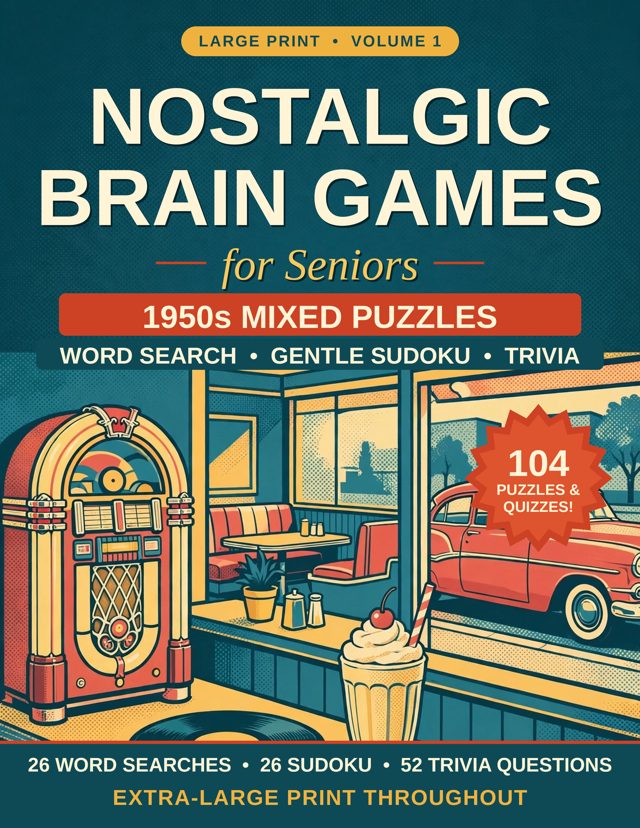
Diner Days: A Nostalgic Look at the 1950s American Diner
Few places sum up the 1950s like the American diner. It is no accident that "Diner Days" is one of our favourite word search themes — nearly every word in it is something you could see, hear or taste at the counter.
Built from railway cars and stainless steel
The earliest diners were literally converted railway dining cars, and even purpose-built 1950s diners kept the look: a long, narrow room, a counter running its length, swivelling stools, and walls of gleaming stainless steel and Formica. Many were prefabricated in factories (by companies like Kullman and O'Mahony) and delivered to their lots nearly complete — a restaurant that arrived by truck.
The order of things
The classic diner ran on a cheerful system:
- The counter was the heart of the room — coffee refills, conversation, and a clear view of the grill.
- The jukebox (and its tabletop cousins, the wallbox selectors) supplied the soundtrack for a nickel a song.
- The menu was long and democratic: eggs any style all day, burgers and fries, a blue-plate special, and pie — always pie — under glass at the counter.
- The waitress knew the regulars by name and their orders by heart; "Adam and Eve on a raft" (two poached eggs on toast) was part of a whole playful shorthand between counter and kitchen.
Why diners flourished
Post-war America was driving, working shifts, and eating out more than any generation before it. Diners were open early, late, or all night; the food was quick, affordable and the same in Ohio as in New Jersey. In a decade of growing sameness on the new highways, the diner was the friendly constant.
If this tour made you smile, the Diner Days word search hides JUKEBOX, MILKSHAKE, SODAPOP, WAITRESS and friends in a 13 by 13 grid — every one of them something you might have ordered, heard or sat on at a 1950s counter.